


Published On 14 Mar, 2026
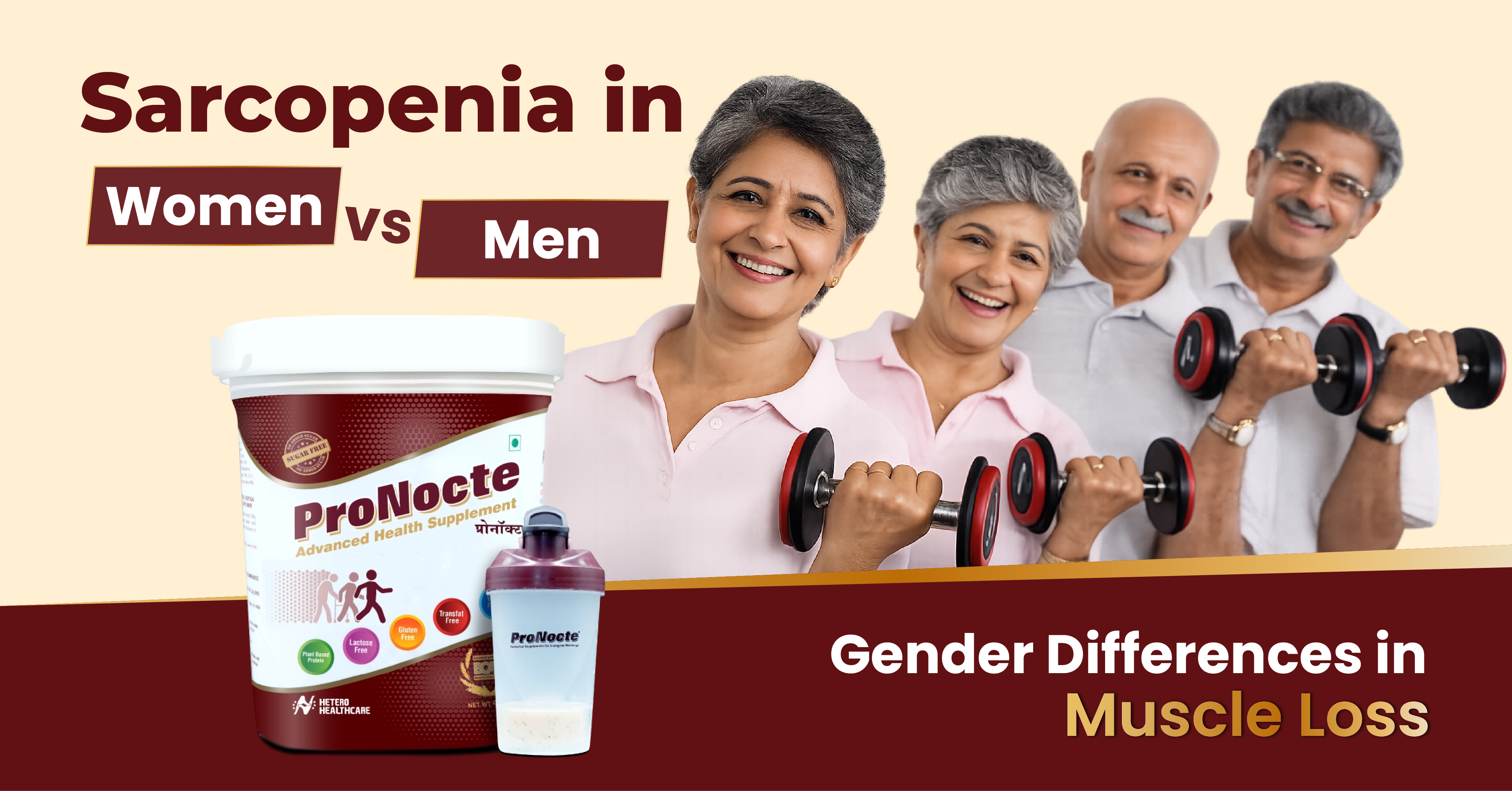
Sarcopenia is the progressive loss of muscle mass, strength, and function that occurs with ageing. While both women and men are affected, research shows clear gender differences in onset, progression, hormonal influence, and symptoms. Women often experience earlier muscle decline linked to menopause, whereas men typically lose muscle mass later but at a faster absolute rate.
Age-related muscle loss is a growing public health concern as populations live longer. Sarcopenia can significantly reduce mobility, independence, and quality of life, increasing the risk of falls, fractures, and long-term disability.
Although sarcopenia affects everyone with age, muscle loss in women vs men is not the same. Differences in hormones, body composition, and ageing patterns mean symptoms and risks vary by gender. Understanding these differences is essential for early awareness, prevention, and healthy ageing.
Sarcopenia is a condition characterised by:
Muscle loss can begin as early as the third decade of life and accelerates after the age of 60. Without intervention, sarcopenia can lead to frailty, reduced balance, slower movement, and difficulty performing daily activities.
Sarcopenia in Women
Women generally have lower baseline muscle mass than men, making them more vulnerable to functional impairment as muscle loss progresses. One of the most significant factors influencing sarcopenia in women is menopause.
Menopause and Muscle Loss
During menopause, estrogen levels decline sharply. Estrogen plays an important role in:
As estrogen decreases, women often experience:
These changes contribute to a higher relative risk of sarcopenia in postmenopausal women.
Sarcopenia in Men
Men typically begin adulthood with greater muscle mass and strength, which can delay visible symptoms of sarcopenia. However, men experience a gradual decline in testosterone, a key anabolic hormone that supports muscle maintenance.
As testosterone levels decrease with age, men may experience:
Although sarcopenia may appear later in men, the absolute amount of muscle lost can be greater, leading to significant functional decline in later life.
Hormones are a major reason for gender differences in sarcopenia.
Estrogen and Muscle Health in Women
Loss of estrogen during menopause is associated with earlier onset of muscle weakness and functional decline.
Testosterone and Muscle Health in Men
Gradual testosterone decline contributes to progressive muscle loss in ageing men, although the transition is typically slower than menopause-related changes in women.
Common Sarcopenia Symptoms in Women
Women with sarcopenia may notice:
Symptoms often overlap with bone density loss, compounding fracture risk.
Common Sarcopenia Symptoms in Men
Men may experience:
Men often underestimate early symptoms because strength loss may be less noticeable initially.
Understanding gender-specific patterns of muscle loss is important because:
Ignoring these differences can delay recognition and increase the risk of frailty and disability.
General Approaches to Managing Sarcopenia
Although sarcopenia cannot be fully reversed, progression can be slowed through:
These strategies are effective for both women and men when adopted early.
Sarcopenia develops due to an imbalance between:
Ageing, hormonal changes, reduced activity, and poor nutrition all contribute to this imbalance, leading to gradual muscle deterioration over time.
A: Sarcopenia affects both genders. Women may experience earlier onset due to menopause, while men often lose more muscle mass later in life.
A: Muscle mass can begin declining from around age 30, with faster loss after age 60.
A: Yes. Women often experience earlier functional weakness, while men typically show larger absolute muscle loss later in life.
A: Yes. Declining estrogen levels during menopause accelerate muscle loss and strength reduction.
A: While ageing cannot be stopped, regular exercise, proper nutrition, and healthy lifestyle habits can significantly slow muscle loss.
Sarcopenia is a natural part of ageing, but its impact differs between women and men due to hormonal changes, muscle composition, and ageing patterns. Women often experience earlier muscle decline around menopause, while men tend to lose muscle mass more gradually but substantially over time.
Recognising these gender differences supports better awareness, prevention, and long-term physical independence. Muscle health is closely linked to recovery, sleep quality, and overall wellbeing - key pillars of healthy ageing.
At ProNocte, we focus on evidence-based insights into ageing, recovery, and holistic health, helping individuals better understand the changes their bodies go through and how to support long-term vitality.




 Disclaimer
ProNocte is a health supplement and is not intended to diagnose, treat, cure, or prevent any disease.

Call Us
1800 103 4696Email Us
sales@heterohealthcare.comAddress
Sy No. 83/1, Plot No.16/A/1 & 16/A/2, 19th & 20th Floor Hetero Tower, Commerzone, Silpa Gram Craft Village, Madhapur, Hyderabad, Shaikpet, Telangana, India, 500081.Copyright © All Rights Reserved by Hetero Healthcare Limited